
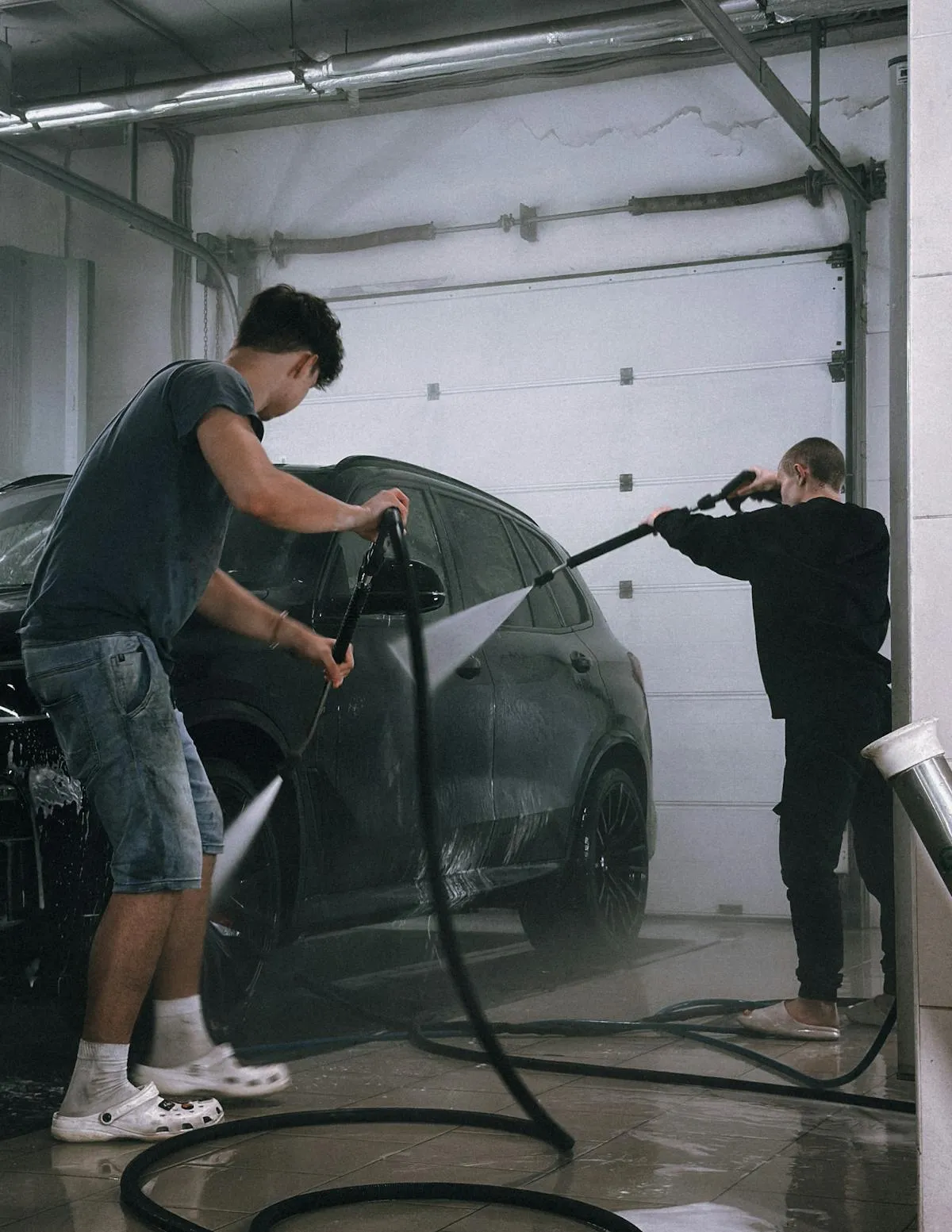
Working in Direct Sunlight: Adjusting Dwell and Technique
Pressure washing in direct sun? Learn how to adjust chemical dwell time, application technique, and workflow to prevent drying and streaking.
Key Takeaways
- Work smaller sections in direct sun to prevent drying
- Mist surfaces as needed to keep chemicals wet
- Increase chemical strength 25-50% to compensate for reduced dwell
- Start early or late when possible — avoid 10am-4pm sun
- Shade makes everything easier — create it when you can
The Sunlight Problem
Direct sunlight creates two problems: heat and UV radiation. Heat accelerates chemical evaporation, giving you less dwell time. UV breaks down chemicals faster, reducing their effectiveness. Chemicals dry before they can work, leaving you with streaky, incomplete cleaning.
Most chemicals need 5-15 minutes of dwell time to work properly. In direct sun on a hot day, you might have 2-3 minutes before the surface starts drying. That’s not enough.
The solutions: work smaller sections, keep surfaces wet, adjust your mix, and change when you work.
How Sunlight Affects Chemicals
Reduced Dwell Time
Chemicals need time to work. That’s true of sodium hypochlorite for killing algae, degreasers for breaking down oil, and pretty much everything else. Drying time = effectiveness lost.
In full sun on an 85°F day, a wet surface might dry in 3-5 minutes. Your chemical stops working as soon as it starts to dry. You’re not getting full cleaning power.
Chemical Degradation
UV light degrades sodium hypochlorite (SH). The stronger the sun, the faster it breaks down. A fresh SH mix might lose 10-20% effectiveness in 15 minutes of direct sun exposure.
Other chemicals are affected too. Surfactants break down faster, acids lose potency, and specialized cleaners degrade. The sun is working against you.
Surface Temperature
Hot surfaces evaporate chemicals faster and can affect cleaning performance. A dark surface in full sun can easily reach 120°F+. That’s hot enough to accelerate evaporation dramatically.
Strategy 1: Work Smaller Sections
The 10x10 Rule
In overcast conditions, you might clean an entire house wall in one go. In direct sun? Work in 10x10 foot sections maximum. Some pros go even smaller—5x5 sections in brutal sun.
Smaller sections mean you can apply, dwell, and rinse before anything dries. You’ll make more passes overall, but each pass is more effective.
Managing the Workflow
Apply chemical to one section only. Dwell for the appropriate time (mist if it starts drying). Rinse completely. Move to the next section.Never apply chemical to multiple sections in direct sun. You’ll never finish rinsing the first section before the last section dries out. One section at a time.
Section Sequencing
Plan your route before you start. Know where each section ends and the next begins. Work toward your exit so you’re not walking through clean areas. For houses, work one wall at a time or break large walls into manageable sections.
Strategy 2: Keep Surfaces Wet
The Mist Technique
As chemicals start to dry (you’ll see the surface getting lighter, foam disappearing), mist the area with plain water from your pressure washer. Use a wide spray pattern and keep the wand moving.
You’re not trying to rinse—just re-wet. A light mist is enough. This buys you more dwell time without reducing effectiveness.
How Often to Mist
In light sun, maybe once during a 10-minute dwell. In hot direct sun, every 2-3 minutes. Watch the surface—when it starts to look dry or lose foam, mist it.
Use plain water, not chemical mix. You’re re-wetting, not re-applying.
Pre-Wetting Helps
Before you apply any chemicals, give the surface a quick rinse with plain water. This cools the surface and slows evaporation. It helps chemical spread evenly and gives you a few extra minutes of dwell time.
Don’t saturate—just a light pre-wet. The surface should be damp, not dripping.
Strategy 3: Adjust Your Mix
Increase Chemical Strength
When you can’t get full dwell time, compensate with stronger chemicals. Not double-strength—that’s dangerous and wasteful. Think 25-50% stronger.
Standard house wash (1% SH): Increase to 1.25-1.5% in sun. Heavy growth (2% SH): Increase to 2.5-3% in sun. Roof mix (2-3% SH): Increase to 3-4% in sun.Always test in an inconspicuous spot first. Stronger chemicals increase risk of damage.
Surfactant is Critical
Surfactant creates foam and slows evaporation. In direct sun, increase your surfactant by 25-50%. More foam = more dwell time.
For a standard house wash using 2 ounces of surfactant per gallon, bump it to 3 ounces in sun. The extra cling makes a real difference.
Mix Fresh and Often
Because chemicals degrade faster in sun, mix smaller batches more frequently. Instead of mixing 5 gallons for a house, mix 2 gallons at a time.
Fresh chemicals work better. Don’t leave mix sitting in the sun for an hour and expect it to work like fresh.
Strategy 4: Timing Your Work
The Golden Hours
Best times to pressure wash: early morning (6-9am) or late afternoon (4-7pm). The sun’s lower, temperatures are cooler, surfaces aren’t baked yet.
Worst time: 10am-4pm in full sun. That’s when surfaces are hottest, evaporation is fastest, and UV is strongest. Avoid if you can.
Cloud Cover is Your Friend
Overcast days are ideal for pressure washing. Clouds block UV, reduce evaporation, and give you consistent working conditions. If it’s partly cloudy, work during cloudy periods and take breaks in full sun.
Wind Complicates Things
Sun + wind = chemicals dry even faster. Windy sunny days are the worst conditions. If you must work in these conditions, work smaller sections and mist frequently.
Strategy 5: Create Shade
Portable Shade Solutions
For small areas, you can create shade with umbrellas, tarps, or even your truck parked to block the sun. It’s awkward but effective.
For house washing, work on the shaded side of the house. As the sun moves, the shaded side changes. Follow the shade around the building.
Taking Shade Breaks
When a section is drying too fast despite your best efforts, take a break. Move to a different area, wait for cloud cover, or come back later. There’s no shame in working around the conditions.
Surface-Specific Considerations
Vinyl Siding
Vinyl heats up in sun and can warp if hit with cold water after baking all day. In extreme heat (95°F+), consider postponing the job or working very early morning.
If you must proceed, pre-wet with warm water if possible, work very small sections, and use moderate pressure (1,000-1,200 PSI max).
Concrete Driveways
Dark concrete gets very hot in sun. Chemicals evaporate fast. Work in 10x10 sections max. Mist frequently. Consider increasing chemical strength 25%.
For oil stain treatment in sun, use a poultice method (apply chemical, cover with plastic to prevent evaporation, let dwell, then uncover and rinse).
Roofs
Never work on a hot roof in direct sun. The heat is dangerous, chemicals evaporate instantly, and you risk damaging the roofing material. Roof work should be done in cool, overcast conditions only.
If you’re soft washing a roof in sun, you’re fighting a losing battle. Postpone.
Wood Decks
Wood in direct sun can be 120°F+. Chemicals flash-evaporate. Work very early morning or wait for overcast weather.
Hot wood also absorbs chemicals differently—you can get blotchy results. If you must work in sun, pre-wet heavily to cool the surface, work tiny sections, and test your results before committing to the whole job.
Common Mistakes in Sunlight
Applying to too large an area. Chemicals dry before you can rinse. Work smaller sections.
Not misting when drying. You lose all effectiveness when chemicals dry. Mist to keep them wet.
Using standard mix strength. Reduced dwell time = weaker results. Increase strength 25-50%.
Working at peak sun hours. 10am-4pm is worst time. Go early or late.
Skipping surfactant. Surfactant slows evaporation and helps chemical cling. You need it more in sun, not less.
Rushing dwell time. Chemicals need time to work even more in sun because heat accelerates some reactions but degradation is still a problem.
Equipment Adjustments
Use More Water
In direct sun, don’t be afraid to use more water. Extra water keeps things wet and gives you more working time. You’re not being wasteful—you’re adapting to conditions.
Nozzle Selection
Wider fan patterns (white 40° nozzle) lay down more water and slow evaporation compared to narrower patterns. When rinsing in sun, consider going one step wider than usual.
Keep Your Equipment Cool
Pressure washers sitting in direct sun can overheat. Park in shade when possible. If you must leave equipment in sun, let it cool down periodically.
Chemical containers sitting in sun heat up and chemicals degrade faster. Keep them shaded or cover with a reflective blanket.
Safety in Sun
Heat Exhaustion Risk
Pressure washing in direct sun is physically demanding. Heat exhaustion is real. Stay hydrated, take frequent breaks in shade, and know the signs: dizziness, nausea, headache, excessive sweating.
Wear a hat, lightweight light-colored clothing, and sunscreen. The sun reflecting off wet surfaces intensifies UV exposure.
Chemical Fumes
Heat makes chemicals volatilize more—you’re breathing more fumes. Take upwind position, wear a respirator for chemical application, and take fresh air breaks.
Surface Temperature
Surfaces in direct sun can burn skin. Test before touching. Wear gloves and protective clothing. Hot concrete can be dangerous to walk on—water can make it slippery too.
Decision Guide: Should You Work in Sun?
Good Conditions (Go Ahead)
- Overcast or light clouds
- Temperature under 85°F
- Early morning (before 10am) or late afternoon (after 4pm)
- Light wind (under 10mph)
- Work in shade when possible
Challenging Conditions (Proceed with Care)
- Full sun but temperature under 80°F
- Partial sun with clouds moving through
- Light wind
- Use all strategies: small sections, misting, stronger mix
Postpone if Possible
- Full sun + temperature over 85°F
- Full sun + wind over 15mph
- Extreme heat (95°F+)
- Delicate surfaces (hot roofs, aged wood)
- You’re not experienced with sun workarounds
The job will be better, faster, and easier in better conditions. Some days it’s worth waiting.
Next Steps
Master working in challenging conditions:
Was this article helpful?
Your feedback helps us improve our content.
Related Articles
Soft Washing Technique: Complete Method and Flow
Master soft washing: low-pressure cleaning with chemical pretreatment. The safe method for roofs, siding, and delicate surfaces.
How Temperature and Sunlight Affect Chemical Performance
How temperature fluctuations, direct sunlight, and seasonal changes impact your pressure washing chemicals. Strategies for getting the most out of your chemicals in any weather condition.
House Washing Guide: Safe Techniques for Every Siding Type
Master house washing techniques for vinyl, stucco, brick, wood, and fiber cement siding. Soft wash methods, chemical selection, and protection protocols for safe exterior cleaning.