

Fleet Washing: Semi-Trucks, Buses, and Heavy Equipment
Professional fleet washing techniques for semi-trucks, buses, and heavy equipment. Learn proper pressure washing methods, regulatory compliance, and wastewater recovery systems.
Quick Answer
Fleet washing requires commercial-grade equipment (4-8 GPM at 2000-3000 PSI), hot water for heavy grease, and strict attention to environmental regulations. Always use downstream injection for chemicals, maintain proper washing techniques to avoid damage, and comply with local wastewater discharge requirements. Professional fleet washing is as much about regulatory compliance as it is about cleaning.
Key Takeaways
- Commercial equipment is essential: You need 4-8 GPM flow rate, not just high PSI
- Hot water is mandatory: Effective fleet washing requires 180-200°F water for grease emulsification
- Wastewater recovery is often required: Many jurisdictions prohibit discharge into storm drains
- Aluminum needs special care: Modern trucks have extensive aluminum that acid can damage
- Time is money: Efficient process and proper setup determine profitability
Understanding Fleet Washing
Fleet washing is a completely different game from residential pressure washing. When you’re cleaning semi-trucks, buses, or heavy equipment, you’re dealing with massive surface areas, heavy grease accumulation, and strict environmental regulations. I’ve washed everything from pickup trucks to entire shipping fleets, and I’ll tell you straight: cutting corners in fleet washing will cost you money and can get you into legal trouble.
The biggest mistake I see new contractors make is thinking they can expand into fleet washing with their homeowner equipment. You can’t. A 2.3 GPM residential machine that’s fine for washing a house will take forever on a fleet of trucks, and you’ll lose money on every job. Commercial fleet washing is about volume and efficiency - you need equipment that can deliver 4-8 gallons per minute consistently.
Typical fleet washing pricing: Semi-trucks: $60-150 each. Buses: $100-250 each. Heavy equipment: $150-500 per machine. These prices vary by region, equipment condition, and how often they need washing.
Equipment Requirements for Fleet Washing
Pressure Washer Specifications
Minimum commercial setup (barely adequate):
- 4 GPM flow rate
- 3000 PSI
- Hot water capability
- Downstream chemical injection
- 200-250 gallon water tank or water access
Ideal professional setup:
- 5.5-8 GPM flow rate
- 3000-3500 PSI
- Hot water (180-200°F)
- Dual downstream injectors (one for soap, one for rinse aid)
- 500+ gallon water tank
- Surface cleaner with 24-28” head
- Hose reel with 200+ feet of hose
I’ve run both setups, and the difference in productivity is massive. With a 4 GPM machine, I could wash maybe 6-8 trucks in a day. With my current 8 GPM hot water setup, I can do 15-20 trucks and still have energy left. The faster equipment pays for itself quickly in fleet washing.
Water source reality: Most fleet locations don’t have adequate water supply. You’ll need a water buffer tank - at minimum 200 gallons, preferably 500+. I use a 525 gallon tank mounted on a trailer, which gives me about an hour of continuous washing time before I need to refill.
Essential Accessories
Surface cleaners: Essential for flat surfaces like trailer sides and bus roofs. Get a 24-28” head with castor wheels and fan jets. Don’t waste money on the cheap ones - they bounce and streak. A good surface cleaner will cut your wash time in half on large flat surfaces.
Hose management: You’ll be running 150-200 feet of hose regularly. Get a quality hose reel - manual or powered, but don’t skip it. Dragging heavy-duty hose around all day will destroy your back and waste time. I prefer powered reels for fleet work.
Chemical metering: Invest in adjustable downstream injectors. Fleet chemicals vary in dilution ratios, and being able to adjust on the fly saves money and improves results.
Fleet Washing Chemicals and Their Uses
Heavy-Duty Fleet Soaps
Commercial fleet soaps are designed for high dilution ratios (typically 100:1 to 200:1) and strong degreasing power. The key ingredients you want to see:
- Sodium hydroxide (lye): Primary degreaser
- Sodium metasilicate: Rust inhibitor and surfactant booster
- Non-ionic surfactants: Penetrating agents
Application ratio: Usually 1-2% solution downstream. In practice, this means your injector draws about 1 gallon of chemical per 100 gallons of water. Stronger isn’t better - too concentrated and you’ll waste money, create excessive foam, and risk damage.
What I use: I’ve had good results with ZEP Commercial Heavy-Duty Fleet Wash and Simple Green Fleet Wash. Both emulsify grease well, rinse clean, and are economical at high dilution rates.
Aluminum-Safe Alternatives
Here’s where fleet washing gets tricky. Modern trucks, especially sleeper cabs and fuel tanks, have extensive aluminum components. Acid-based brighteners will permanently etch aluminum, turning it a dull gray. I’ve seen new trucks ruined by careless application of strong acid.
Aluminum-safe options:
- Neutral pH fleet soaps (pH 7-9)
- Citrus-based cleaners (d-Limonene)
- Enzymatic degreasers
These won’t brighten oxidized paint like acid will, but they also won’t damage aluminum. For most fleet washing, aluminum-safe is the smart choice. Leave the two-step acid brightening for experienced operators who can identify aluminum vs. steel surfaces.
Specialized Cleaners
Engine degreasers: For heavy grease on engine compartments and undercarriages. I like Meguiar’s Super Degreaser or Purple Industrial Cleaner. Apply with a pump sprayer, let dwell 5-10 minutes, then pressure wash. Wear proper PPE - these are strong chemicals.
Bug and tar removers: For front ends that accumulate insect remains and road tar. Citrus-based products work well and are safer than petroleum solvents. Apply, let dwell 3-5 minutes, then wash.
Environmental and Regulatory Compliance
Important reality: Most jurisdictions prohibit discharge of wash water into storm drains. Storm drains flow directly to waterways without treatment. If you’re washing fleets commercially, you must either:
- Collect and discharge to sanitary sewer: Use drain mats or portable containment berms, then pump to a sink or toilet (where legally allowed)
- Water recycling system: Expensive but pays off for high-volume operations
- Off-site disposal: Contract with a wastewater hauling service
Fines are real: I’ve heard of contractors fined $10,000-$50,000 for illegal discharge. Don’t risk it. The EPA takes water quality seriously, and they do investigate reports.
Semi-Truck Washing Techniques
Pre-Walk and Assessment
Before you start washing, walk around the vehicle and identify:
- Aluminum components: Fuel tanks, sleeper panels, trim - these need aluminum-safe products
- Heavy grease areas: Engine compartment, undercarriage, fifth wheel
- Delicate areas: Mirrors, lights, decals, chrome trim
- Special requests: Driver or company may have specific concerns
Document everything: Use your phone to take before photos, especially if there’s existing damage. This protects you from claims.
Washing Process
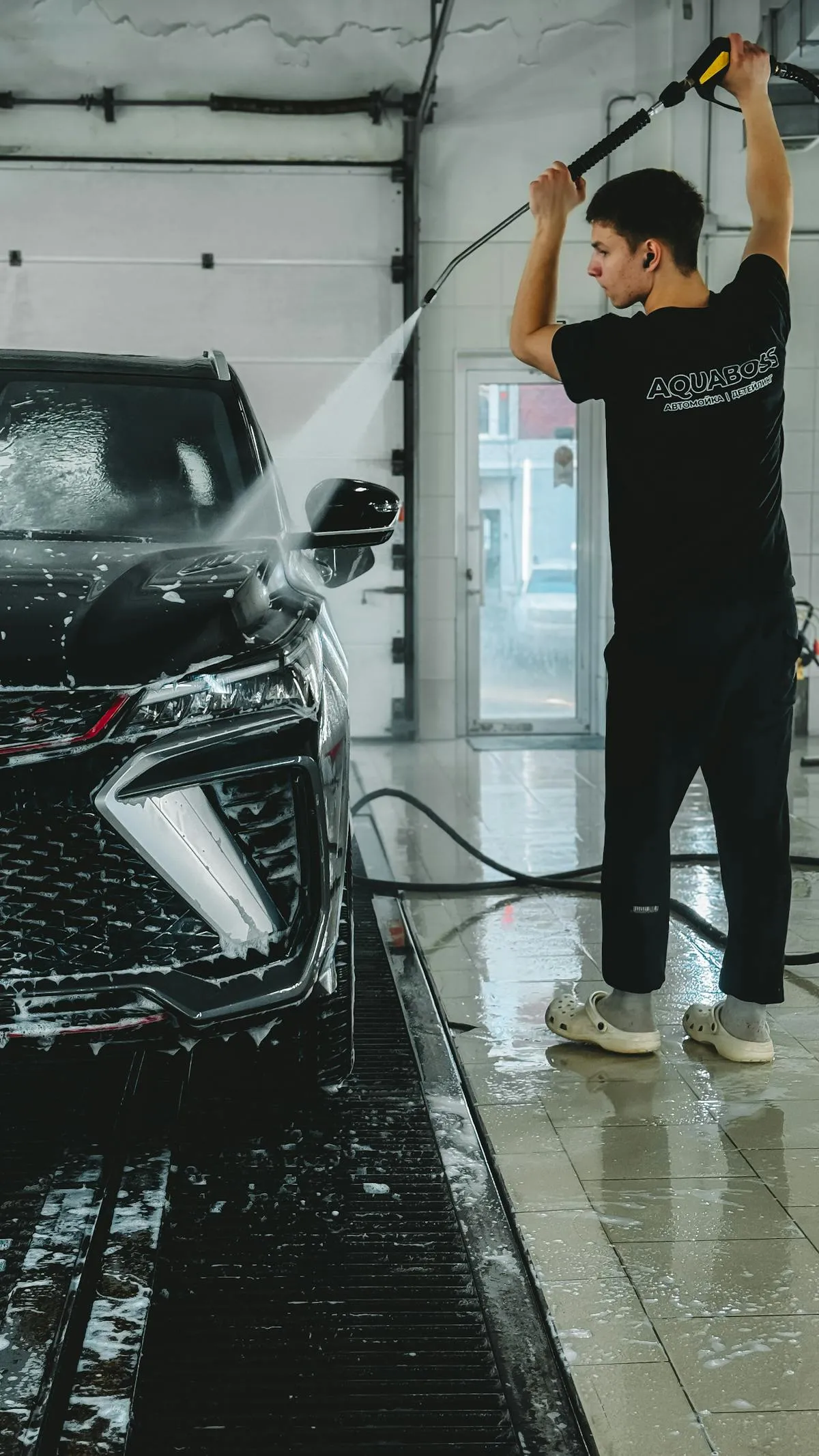
Step 1: Pre-rinse and debris removal
- Use 25-40° nozzle (white or green)
- Work from top to bottom
- Knock off loose mud and debris
- Pay attention to undercarriage and wheel wells
Step 2: Chemical application
- Switch to downstream injection
- Apply from bottom up (helps with even coverage)
- Work in sections: hood, cab, sleeper, trailer sides, trailer rear
- Let chemical dwell 3-5 minutes - don’t let it dry on the surface
Step 3: Agitation (optional but recommended)
- Use a soft-bristle brush on extension pole
- Focus on bug splatter on front, exhaust staining on rear
- Be gentle around decals and trim
- This step dramatically improves results
Step 4: Pressure washing
- Start rinsing from top and work down
- Use 25° nozzle (green) for most surfaces
- Switch to 40° (white) for decals and sensitive areas
- Use 15° (yellow) only on heavy grease spots - test first
- Keep nozzle 12-18 inches from surface
- Use fan motion, not concentrated streams
Step 5: Final rinse
- Rinse from top to bottom with clean water
- Use 40° nozzle to prevent streaking
- Pay special attention to recessed areas where soap collects
Speed and Efficiency Tips
- Set up your workflow: Chemical application → agitation → rinse. Do all trucks through each stage, not one truck completely at a time. This is more efficient.
- Use two injectors: Set one for soap, one for rinse aid or wax. Switch between them without stopping.
- Surface cleaner for trailers: A 24” surface cleaner will wash a trailer side in half the time of hand-spraying.
- Team approach: With a helper, one applies chemicals while the other pressure washes. Can double productivity.
Typical time per truck:
- Solo operator: 30-45 minutes
- Two-person team: 15-25 minutes
- Experienced team with optimized setup: 10-15 minutes
Bus Washing Considerations
Buses present some unique challenges compared to semi-trucks:
Structural Differences
- Lower profile: Easier to reach roof, but more walking
- More windows: Need careful chemical selection to avoid damage
- Variety of materials: Painted metal, fiberglass, plastic trim, glass
- Transit vs. charter: Transit buses often have more grime, charter buses more luxury finishes to protect
Bus-Specific Techniques
Roof washing: Most bus roofs are painted metal or fiberglass. Use aluminum-safe products and 40° nozzle. The roof accumulates surprising grime from air turbulence.
Window frames: Use neutral pH cleaners near windows. Strong caustics can etch aluminum frames and damage seals. Rinse thoroughly.
Front and rear caps: Often fiberglass with painted graphics. Treat like you would a fiberglass boat - moderate pressure (1500-2000 PSI), wide fan pattern.
Undercarriage: Buses collect road grime and salt. If washing transit buses, the undercarriage deserves attention, especially in northern states with road salt.
School Bus Specifics
School buses are their own beast:
- Yellow paint: Harder to keep clean, shows grime more than white
- Heavy vinyl interiors: If washing interiors (rare but sometimes needed), be careful with moisture
- Public scrutiny: These vehicles carry children - they need to look clean
- Budget constraints: School districts often have limited budgets, price accordingly
Heavy Equipment Washing
Heavy equipment - excavators, bulldozers, backhoes, loaders - is the most challenging fleet washing work. These machines are covered in grease, oil, mud, and accumulated grime that’s been baked on by engine heat.
Pre-Wash Preparation
Degreasing: Heavy equipment almost always needs pretreatment with a strong engine degreaser. Focus on:
- Hydraulic systems
- Engine compartments
- Undercarriages and tracks
- Bucket/blade edges
- Pivot points and grease fittings
Application method: Use a pump sprayer or garden sprayer. Apply degreaser generously, let dwell 10-15 minutes. Reapply on heavy grease. Don’t let it dry completely - if it’s drying too fast, mist with water.
Washing Techniques
Lower pressure: These machines have seals, bearings, and components that water can damage. Use 2000-2500 PSI maximum, and keep nozzle distance 18+ inches.
Work strategically:
- Rinse loose debris
- Apply degreaser to greasy areas
- Apply fleet soap to painted surfaces
- Agitate with brushes if needed
- Pressure wash from top down
- Rinse thoroughly
Track and wheel cleaning: This is often the dirtiest part. Tracks and wheels accumulate packed mud and grease. You may need to:
- Knock off loose mud with a shovel or pressure washer
- Apply degreaser liberally
- Use a brush on stubborn areas
- Rinse from multiple angles to clean track surfaces
Safety Considerations
Heavy equipment washing has real dangers:
- Moving parts: Never put your hands or tools near moving machinery
- Hot surfaces: Engine components can burn you
- Pinch points: Be aware of hydraulic cylinders, tracks, buckets
- Stability: Don’t undermine the machine with high-pressure water - you could cause it to shift
- Electrical: Some machines have exposed electrical components
Personal protective equipment (PPE):
- Safety glasses (minimum) or face shield
- Chemical-resistant gloves
- Steel-toe boots
- Hearing protection
- Long sleeves and long pants
Wastewater Recovery and Management
This is the aspect of fleet washing that’s often overlooked until it’s too late. Environmental regulations vary by jurisdiction, but the general principle is consistent: don’t pollute waterways.
Recovery Methods
Drain mats: Rubber mats with built-in drains that direct water to collection point. Good for paved surfaces. Expensive but effective.
Containment berms: Portable berms create a washing area. Water pools and is pumped out. More versatile than mats.
Vacuum recovery systems: Specialized equipment that vacuums water as you generate it. Expensive but efficient for high-volume operations.
Water recycling: Advanced systems filter and reuse wash water. Large upfront investment ($10,000-$50,000), but saves on water and chemical costs over time.
Practical Approach for Most Contractors
For most fleet washers starting out:
- Verify local regulations: Contact your local environmental agency. Requirements vary widely - some areas are lenient, others strict.
- Invest in basic containment: Drain mats or berms are usually sufficient for small operations
- Discharge properly: Pump to sanitary sewer where allowed, or contract with hauler
- Document everything: Keep records of your wastewater disposal
- Be prepared to show compliance: Regulators do check
Pricing Your Fleet Washing Services
Fleet washing pricing is competitive but can be profitable with efficient operations:
Semi-Trucks
- Basic wash: $60-90 per truck
- With engine compartment: $80-120
- With interior: $100-150
- Fleet contracts: 10-20% discount for regular monthly/biweekly service
Buses
- Standard transit bus: $100-150
- Charter/coach bus: $150-250
- School bus: $80-120
- Fleet contracts: 15-25% discount for regular routes
Heavy Equipment
- Small equipment (skid steers, backhoes): $100-200
- Medium equipment (excavators, dozers): $200-350
- Large equipment (scraper, graders): $350-500
- Track cleaning only: $50-150 additional
Fleet Contract Considerations
Fleet contracts are where the real money is:
- Regular service: Weekly, biweekly, monthly
- Consistent income: Easier to plan your business
- Efficiency gains: You learn the fleet, optimize your process
- Pricing: Often slightly lower per unit, but total revenue is higher
Contract structure: Specify frequency, pricing, what’s included, cancellation terms, and environmental compliance responsibilities.
Common Fleet Washing Mistakes
I’ve made most of these mistakes myself, or I’ve seen other contractors make them. Learn from others’ errors:
Using Residential Equipment
Trying to wash fleets with a 2-3 GPM homeowner machine. You’ll be all day on a job that should take two hours, and you’ll make less money than working at a fast-food restaurant. Commercial equipment isn’t optional in fleet washing.
Ignoring Environmental Regulations
Discharging wash water into storm drains. The fines can be massive, and you’re polluting waterways. Do your research, invest in proper containment, and dispose of wastewater properly.
Damaging Aluminum with Acid
Applying acid brightener indiscriminately. Modern trucks have lots of aluminum, and acid will permanently damage it. Use aluminum-safe products unless you’re certain the surface is steel.
Washing in Direct Sunlight
Letting soap dry on the vehicle before rinsing. This leaves streaks and residue that are difficult to remove. Wash in shade or during cooler parts of the day.
Using Too Much Pressure
Blasting away decals, trim, and paint with 4000 PSI. Most fleet washing can be done effectively at 2000-2500 PSI with proper technique and chemicals.
Not Protecting Electrical Components
Spraying water directly into electrical connections, alternators, and starters. Some modern trucks have sensitive electronics that can be damaged. Avoid direct high-pressure spray on electrical components.
Safety Considerations
Fleet washing has legitimate safety concerns beyond just environmental compliance:
Chemical Safety
- Wear PPE: goggles, gloves, long sleeves
- Know your chemicals: read SDS sheets
- Proper ventilation: especially when using strong degreasers
- Storage: keep chemicals secured and labeled
Fall Protection
- Never stand on the truck or equipment you’re washing
- Use ladders properly: secure footing, don’t overreach
- Roof work: use proper fall protection when washing bus or truck roofs
Traffic Awareness
- Work areas: cone off your work area
- High-visibility clothing: wear reflective vests
- Communication: know where other vehicles and workers are
- Parking lots: be aware of moving vehicles
Pressure Washer Safety
- Never point the wand at yourself or others
- Secure the hose: tripping hazard
- Kickback: high pressure can cause the wand to jerk
- Hearing protection: gas-powered washers are loud
When to Call a Professional
Fleet washing is typically professional work, but there are times when even experienced contractors should call in specialists:
Specialized Situations
- Hazmat concerns: If there’s spilled hazardous material, call hazmat responders
- Electrical issues: If there’s risk of damaging expensive electrical systems
- Paint damage: If the existing paint is fragile, testing first is critical
- Vintage/collector vehicles: These may require specialty care
Equipment Limitations
- Water access: If there’s no adequate water supply
- Wastewater disposal: If you can’t legally dispose of the water
- Size limitations: Extremely large equipment may require specialized setup
There’s no shame in turning down work that’s beyond your capabilities or equipment. It’s better to refer the job to someone properly equipped than to damage property or violate regulations.
People Also Ask
How often should fleet vehicles be washed?
It depends on use and exposure. Highway trucks that stay relatively clean might only need washing monthly. Construction equipment that’s constantly in mud and grease may need washing weekly. Transit buses in urban areas typically need washing 2-4 times per month. The key factor is how quickly grime accumulates and how important appearance is to the business.
Can I wash fleet vehicles in cold weather?
Yes, but with precautions. Use hot water (180-200°F) to prevent freezing. Add windshield washer fluid to your water tank (10-20% ratio) to lower freezing point. Work quickly to prevent ice formation. Be aware that water on the ground will freeze, creating slip hazards. In very cold conditions (below 20°F), consider postponing or using a heated indoor facility.
What’s the difference between fleet soap and regular car wash soap?
Fleet soaps are designed for heavy degreasing and high dilution ratios (100:1 to 200:1). They contain stronger surfactants and often sodium hydroxide for cutting grease. Car wash soaps are milder, designed to protect wax and not strip protection. Fleet soap will strip wax and can dull automotive finishes if used regularly on personal vehicles.
Do I need a hot water pressure washer for fleet washing?
Not strictly required, but strongly recommended. Hot water emulsifies grease and oil far more effectively than cold water. I’d estimate that hot water improves grease cleaning by 50-70% and reduces overall wash time by 30-40%. For heavy equipment and engine compartments, hot water is almost essential. You can do it with cold water, but you’ll work harder for inferior results.
How do I remove fuel stains from paint?
Fresh fuel stains can often be removed with a strong citrus-based degreaser. Apply, let dwell 5-10 minutes, then wash. Older fuel stains may have damaged the paint - fuel is solvent and can soften automotive paint. In these cases, you may need to wet sand and buff, or the paint may need refinishing. Test a small area first to see if the stain can be removed without damaging paint.
Is it safe to pressure wash engine compartments?
Yes, but with caution. Cover the alternator, air intake, and any exposed electrical connections with plastic bags. Use lower pressure (1500-2000 PSI) and keep nozzle distance 18+ inches. Avoid direct spray into electrical components. Let the engine cool before washing - hot metal can crack if hit with cold water. Many professionals prefer to degrease by hand and rinse gently rather than blasting with high pressure.
Next Steps
- The Two-Step Fleet Wash Process: Acid and Alkaline - Advanced brightening techniques for experienced fleet washers
- Boat and Marine Vessel Washing - Specialized techniques for marine applications
- Heavy Equipment and Construction Vehicle Cleaning - In-depth guide to construction equipment
- Commercial Pressure Washer Equipment Guide - Equipment selection and setup recommendations
Was this article helpful?
Your feedback helps us improve our content.
Related Articles
The Two-Step Fleet Wash Process: Acid and Alkaline
Master the two-step fleet wash process using alkaline pre-soak and acid brightener. Learn proper acid/alkaline balance, aluminum safety, and professional brightening techniques.

Boat and Marine Vessel Washing: Complete Guide
Wash boats and marine vessels safely removing salt and marine growth without damaging gel coat or hull. Proper pressure, hull safety, and environmental regulations for marine cleaning.
Heavy Equipment and Construction Vehicle Cleaning Guide
Professional techniques for cleaning excavators, bulldozers, loaders, and tracked construction equipment. Learn proper pressure washing methods, degreasing heavy machinery, and undercarriage cleaning.
Commercial Pressure Washing: How It Differs from Residential
Understanding the key differences between commercial and residential pressure washing. Learn business strategies, equipment needs, pricing models, and operational requirements for commercial success.