
Pressure Washing PPE Guide: Essential Protection for Every Job
Complete guide to pressure washing personal protective equipment (PPE). Required gear, chemical protection, and safety standards.
Pressure washers operate at 1,000 to 4,000 PSI, enough force to inject water through your skin. The high-pressure stream causes injuries that last a lifetime. Chemical exposure adds more risk. Eye damage, hearing loss, chemical burns, and impact injuries are common in this industry.
Proper PPE is not optional. It is the difference between going home healthy and going to the emergency room.
- Eye protection always—water and chemicals cause permanent damage
- Hearing protection mandatory—gas washers produce damaging noise
- Chemical-resistant gloves only—prevent burns and chemical absorption
- Closed-toe shoes minimum—steel toe boots significantly better
- Respirators with chemicals—SH fumes and acids damage lungs
Essential gear (every job)
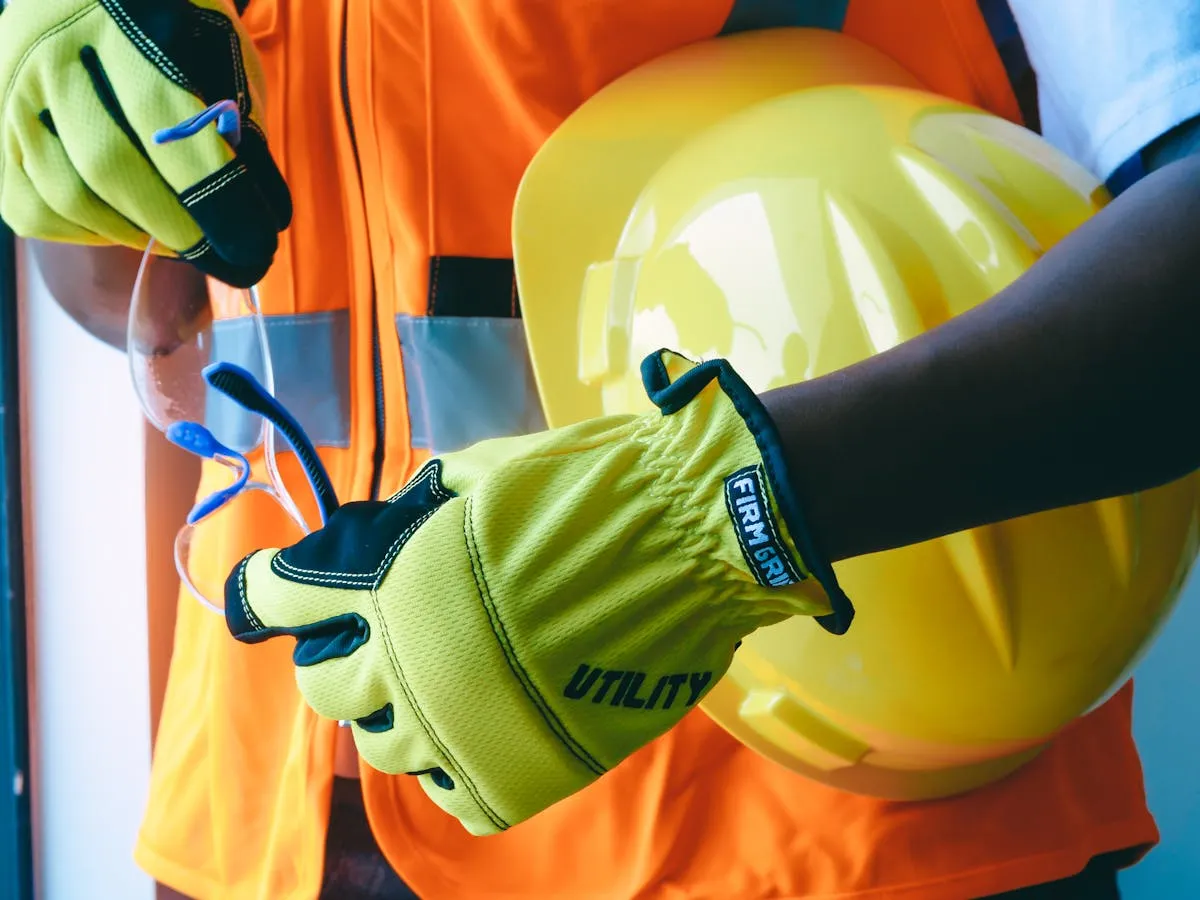
Eye protection: ANSI Z87.1 rated glasses or goggles are mandatory. Choose polycarbonate, impact-resistant lenses with side shields and anti-fog coating.
Regular glasses offer no protection against debris or chemical splash. Impact-resistant eyewear is essential. Many professionals keep multiple pairs on hand because a single scratch reduces visibility and compromises protection.
Cost: $15-50.
Gloves: Nitrile (disposable), rubber (reusable), or specialty gloves work well. Never use cotton—it absorbs chemicals and becomes a direct pathway to burns. Latex breaks down with many pressure washing chemicals and offers false security.
Fingerless gloves provide no protection and should be avoided entirely.
Cost: $10-40/pair.
Hearing protection: Earplugs (NRR 25+), ear muffs (more effective), or electronic models (allow conversation) all work. Gas washers produce 85-100+ dB of noise. A surface cleaner attached to a gas unit reaches 95-105 dB.
Hearing damage is cumulative and permanent. Once it’s gone, it doesn’t return. Many professionals use both earplugs and muffs when running gas equipment all day.
Cost: $5-50.
Closed-toe shoes with grip: Non-slip soles, water-resistant construction, and secure fit are essential. Better option: Steel toe boots that protect against drop impacts, waterproof boots with a shank for arch support.
Cost: Basic $40-80, steel toe $80-150.
Pressure washers operate at forces capable of causing serious lacerations and injecting fluid directly beneath the skin. Even small puncture wounds from high-pressure spray can cause tissue damage, infection, or require surgical repair. Never point the wand at people, animals, or yourself.
Job-specific gear
Respirator: Required when using SH, acids, working in enclosed spaces, dealing with poor ventilation, or during extended chemical use.
Choose based on exposure level: N95 for minimal light use, half-face for most chemical work, full-face for heavy chemical use. Cartridges vary by application. N95 filters particulates only, P100 handles particulates and some vapors, acid gas cartridges are specialized for acid work.
Cost: N95 $1-3, half-face $30-60, cartridges $15-30/pair.
Rain suit or apron: Protects skin and clothing during house washing, roof cleaning, vertical surface work, heavy chemical use, or hot water applications.
Options include lightweight rain suits (jacket and pants), PVC aprons, or waterproof bib overalls. Look for sealed seams, adjustable cuffs, breathable backs, and chemical resistance.
Cost: Rain suit $40-80, PVC apron $25-50, bib overalls $80-150.
Optional but useful gear
Knee pads: $25-60. Reduce fatigue and protect knees during extended driveway and patio work.
Back support: $30-80. Reduces lower back strain and improves core stability during extended wand work or all-day jobs.
- "Just a quick job" mindset: Accidents don't respect job duration. Injuries happen on 2-minute jobs just as often as 2-hour ones. Wear full PPE every single time, no exceptions.
- Sunglasses as eye protection: Sunglasses protect from UV rays, not projectiles. Debris passes right through. Always wear ANSI Z87.1 rated safety glasses or goggles.
- Worn or damaged PPE: Scratched eyewear compromises clarity and impact resistance. Stiff or cracked gloves fail when needed most. Replace immediately when signs of wear appear.
- Skipping hearing protection on short jobs: Damage accumulates over time and doesn't reverse. Wear protection for all gas washer use, regardless of duration.
PPE by job type
House washing: Glasses, chemical-resistant gloves, closed-toe shoes, rain suit or apron, respirator (when using SH).
Concrete/flatwork: Glasses, gloves, closed-toe shoes, hearing protection, optional knee pads.
Roof cleaning: Glasses, gloves, respirator (SH fumes present significant risk), rain suit, non-slip footwear. Professional roof cleaning should be considered for steep pitches.
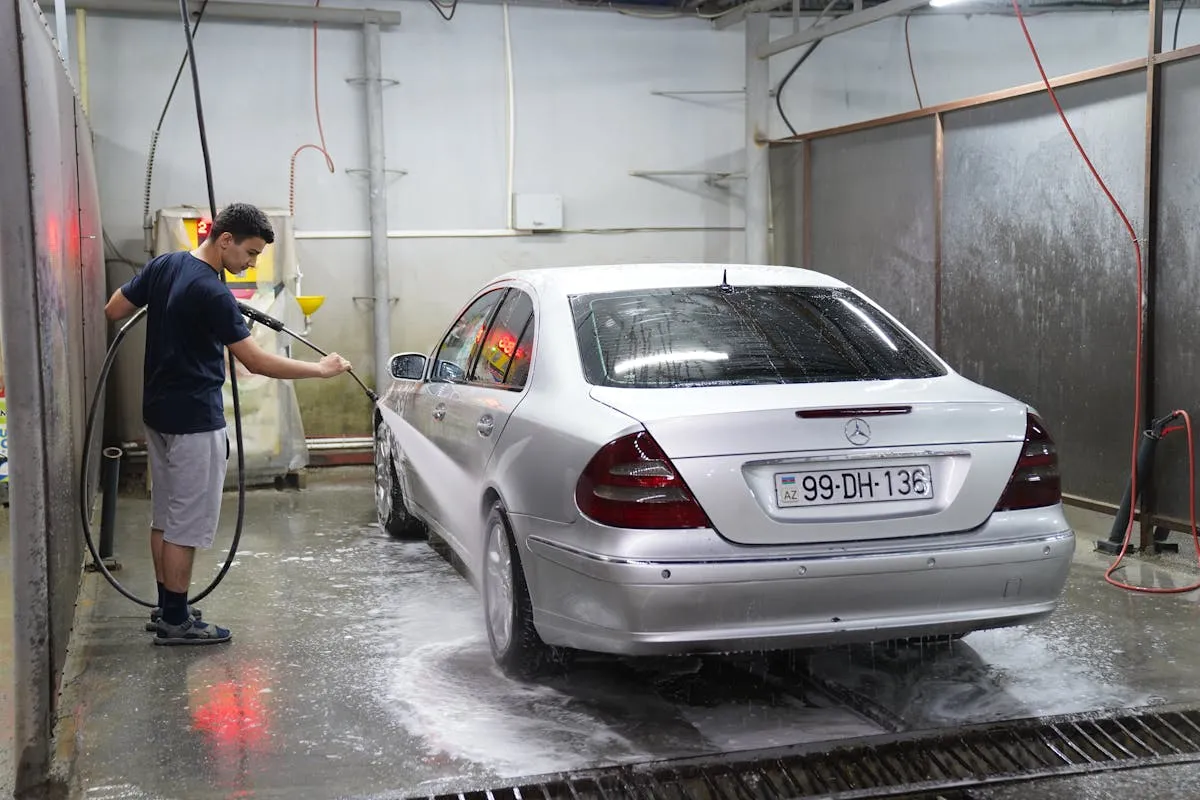
Vehicle washing: Glasses, gloves, closed-toe shoes, rain suit (when using chemicals).
Acid washing: Goggles (not just glasses), acid-resistant gloves (neoprene or nitrile), respirator with acid gas cartridges, PVC apron.
PPE maintenance and replacement
Eye protection: Inspect daily for scratches or damage. Clean with microfiber cloth and deep clean weekly with soap and water. Replace every 1-2 years or immediately if damaged.
Gloves: Rinse after chemical exposure and air dry away from heat. Inspect monthly for punctures. Replace every 3-6 months or when compromised.
Respirators: Remove and store cartridges separately. Wipe facepiece weekly and inspect for cracks. Wash with mild soap, check valve function, and inspect seals regularly. Replace facepiece every 1-2 years; replace cartridges per manufacturer guidelines (typically 30 days of heavy use).
Hearing protection:
- Disposable earplugs: Replace after each use
- Reusable earplugs: Clean weekly, replace monthly
- Ear muffs: Clean cushions weekly, replace every 6-12 months, replace bands if stretched or cracked
Keep a dedicated PPE bag or toolbox with duplicates of critical items. Damaged eyewear? Grab a backup pair. Glove tear? Use a new pair immediately. This redundancy prevents shortcuts when tired or rushing between jobs.
Sizing and fit
Safety glasses/goggles: Must sit securely without sliding. Temples should not pinch. Lenses cover eyes completely with no gaps at edges. Most have adjustable temples and interchangeable nose pads—try before purchasing.
Gloves: Measure around the hand excluding the thumb. XS: 6-7”, S: 7-8”, M: 8-9”, L: 9-10”, XL: 10-11”. Fingers reach the ends without tightness, palms fit snugly, cuffs cover the wrist, and grip remains comfortable.
Respirators: Measure from nose bridge to chin. S: under 4”, M: 4-5”, L: 5”+. The mask must cover nose and mouth completely with an airtight seal. Straps should be comfortable but secure. Test fit by putting on the mask, covering the cartridges, and inhaling gently—it should suction to the face. If air leaks, adjust the straps.
Boots: Use regular shoe size (work boots often run ½ size large) and try on with work socks. Toes should not hit the front (test by wiggling). Heels should not slip. Seek good arch support and snug ankle support without tightness.
Budget breakdown
Homeowner minimum (occasional use): Glasses $20, gloves $15, earplugs $15, shoes $60. Total: ~$110.
Regular use (weekend or part-time): Glasses $25, goggles $35, gloves $30, respirator $40, earplugs $25, rain suit $50. Total: ~$205.
Professional (full-time): Glasses $200, gloves $100, half-face respirator $40, cartridges $60, electronic muffs $50, rain suit $100, boots $150, knee pads $40, back support $50. Total: ~$790.
Professional-grade PPE prevents career-ending injuries. The cost is a fraction of what medical expenses or permanent disability would run you.
Quick reference table
| Job | Eyes | Hands | Hearing | Respirator | Suit | Boots |
|---|---|---|---|---|---|---|
| Car wash | ✓ | ✓ | - | - | - | ✓ |
| Driveway | ✓ | ✓ | ✓ | - | - | ✓ |
| House wash | ✓ | ✓ | ✓ | ✓ | ✓ | ✓ |
| Roof | ✓ | ✓ | ✓ | ✓ | ✓ | ✓ |
| Deck stain prep | ✓ | ✓ | ✓ | - | - | ✓ |
| Commercial flatwork | ✓ | ✓ | ✓ | ✓ | ✓ | ✓** |
| Acid washing | ✓ | ✓ | ✓ | ✓** | ✓ | ✓ |
✓ = Required | - = Optional | = Specialized**
Where to buy PPE
Online: Amazon, Home Depot, Lowes, Grainger, MSC Industrial Supply, Safety Gear Direct. Best for: eyewear selection, bulk earplugs, and rain suits.
In-store: Local hardware stores, farm supply stores, industrial safety suppliers. Best for: boots (try on first), gloves (feel and fit), and respirators (fit testing).
OSHA regulations and standards
OSHA Standard 1910.132: Employers must provide appropriate PPE, train employees on proper use, ensure proper fit, and maintain equipment to working condition.
If you operate as a professional or employ others, you must provide PPE and comprehensive training.
Applicable Standards:
- ANSI Z87.1: Eye and face protection
- ANSI S3.19: Hearing protector performance
- ANSI/ISEA 105: Hand protection
- ASTM F2412: Foot protection
The bottom line
Pressure washing is hard on the body. The industry sees permanent hearing loss, corneal scarring, chemical burns, and crush injuries. None of these are necessary when proper PPE is used consistently.
Gear up every single time, regardless of job length. A two-minute task without eye protection can cause the same damage as an eight-hour shift.
Was this article helpful?
Your feedback helps us improve our content.
Related Articles
Pressure Washing Safety: Essential Rules Every Operator Must Follow
Critical pressure washing safety rules: PPE, electrical hazards, ladder safety, and chemical handling. Prevent injuries and protect property.
Understanding SDS (Safety Data Sheets): Complete Guide for Pressure Washers
Learn to read and interpret Safety Data Sheets (SDS) for pressure washing chemicals. Understand hazards, PPE requirements, and emergency procedures.
Your First Pressure Washing Job: Step-by-Step Success Guide
Complete guide to your first pressure washing job. Setup, technique, safety, and common mistakes to avoid. Start pressure washing with confidence.