
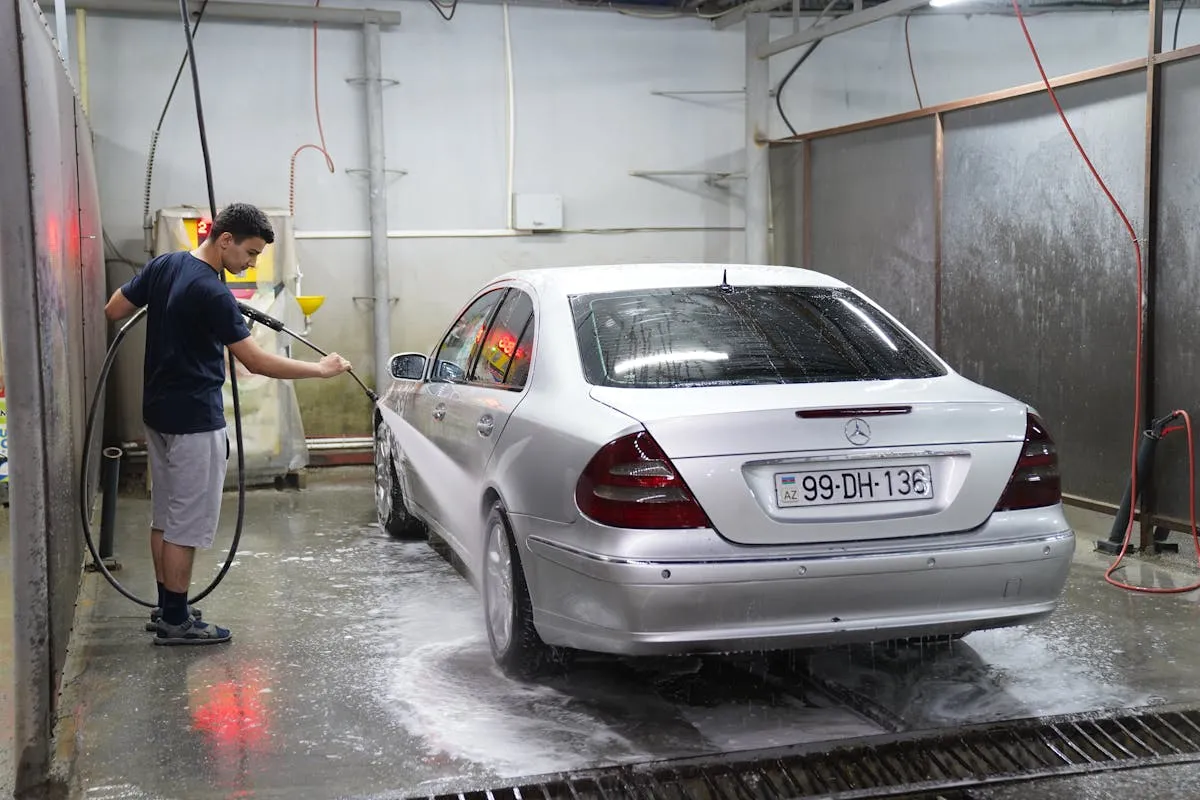
Your First Pressure Washing Job: Step-by-Step Success Guide
Complete guide to your first pressure washing job. Setup, technique, safety, and common mistakes to avoid. Start pressure washing with confidence.
The core of a solid first job: Prep your site, test your equipment, start with concrete, master one surface, and always wear safety gear. Speed comes later. Fundamentals come first.
Before You Begin: Get Your Stuff Together
You don’t need much to get started, but what you have needs to work properly.
You’ll definitely need:
- Pressure washer (gas or electric — either works, pick based on power and convenience)
- High-pressure hose (look it over for cracks or soft spots)
- Spray gun with a safety latch
- A handful of nozzles (green 25°, white 40°, and black soap tip minimum)
- Garden hose connected to a working faucet
- Safety glasses, gloves, and shoes you don’t mind getting soaked
Nice additions once you get going:
- Surface cleaner for flat areas (game changer for driveways)
- Extension wand if you’ve got a second story
- Downstream injector for chemicals (upstream can damage your pump)
- Cheap garden sprayer for pre-treating stubborn stains
Setting Up Your Site
Spend 20-30 minutes prepping before you fire anything up. Move the vehicles, sweep out loose debris, and figure out where your water’s going to drain.
Clear and cover: Move furniture and toys. Close windows. Tape over vents, outlets, and anything electronic on the outside of the house. Water travels farther and hits harder than most people expect, especially around exhaust vents and electrical fixtures.
Watch for hazards: Look for power lines, electrical boxes, and anything expensive or delicate. Plan where the runoff goes so you’re not flooding the neighbor’s yard or pushing water toward your foundation.
Set up your station: Put your washer in a central spot where you can reach everything without dragging hoses everywhere. The less moving around you do before you start, the smoother the whole job goes.
Pro tip: Mark your work area with chalk or a rope if you're cleaning a large space. It helps you stay organized and prevents missing spots.
Step 1: Get Your Equipment Running
First-Time Setup
If you just bought a new washer, pull it out of the box and give the manual a quick read. Most setup is straightforward — attach the hose, plug in the gun, check the oil if it’s gas-powered.
Electric washer owners: Use a GFCI outlet (that’s the outlet with the reset button). Don’t use a long extension cord — get a proper heavy-duty one, keep water away from plugs, and don’t run the washer over your own cord.
Gas washer owners: Check your oil before you start anything. Use whatever grade your manual says, add fresh gas (87 octane is fine, ethanol-free is better if you can get it), and clean the air filter if it looks clogged.
Test It Out Before You Wash Anything
This step is boring and easy to skip. Don’t skip it.
Turn on your water source, squeeze the trigger until water comes out steady (you’ll hear the pump stop pulsing), then fire up the washer. Test spray on a patch of concrete you don’t care about. Listen for weird noises. Look for leaks at the connections. The spray pattern should be even — no stuttering, no weak spots.
If something doesn’t feel right, figure it out now, not halfway through your driveway.
Step 2: Pick a Good Starting Project
Start with concrete. Seriously. A driveway or sidewalk is the best training ground because concrete can handle abuse and you’ll see results immediately. You don’t need chemicals, you don’t need special technique, and it’s forgiving if you make mistakes.
Save the fancy stuff for later. Skip roofs, skip wood decks, skip your car. Those require skills and judgment that come with experience.
What to pick first:
- Your own driveway
- A friend’s patio
- That grimy concrete pad behind the garage
Basically anything flat and concrete. A two-car driveway takes about 1-2 hours your first time as you’re learning the rhythm, testing distances, and building confidence. That’s normal. Expect to be slower on your first few jobs.
Don't go there yet: Roofs require fall protection and balance. Wood decks splinter easily. Car paint gets destroyed by pressure washers. Leave these for when you've got experience.
Step 3: How to Actually Hold and Use This Thing
Plant your feet shoulder-width apart with a slight bend in your knees. Don’t lock your legs or you’ll get tired fast. Hold the wand with both hands — one on the gun, one on the wand body — and keep it roughly at chest height. Don’t overextend your arms or you’ll lose control and get exhausted.
Start with the nozzle about 12 inches from whatever you’re cleaning. Squeeze the trigger to get water flowing, then sweep sideways in smooth, even passes. Overlap each pass by about 50% so you don’t end up with stripes. The whole time, keep moving. Never point at one spot and hold the trigger — that’s how you dig trenches and blow holes in things.
The biggest mistake beginners make is standing too close. You don’t need to be right up against the surface. Pressure actually does more at distance than proximity does. Start back, test it out, then move closer if you need more power. Let go of the trigger before you turn or move to a new section. It saves water, saves wear on your equipment, and keeps you safe.
If the surface behind you still looks dirty, you’re going too fast. Slow down. Pressure washing isn’t about speed; it’s about letting the water do its job.
Distance is your control. 8-12 inches is the sweet spot for most residential work. Too close = damage. Too far = no cleaning. Find your distance and stick with it.
Step 4: Washing Your First Driveway
Sweep the whole driveway first to get loose dirt and leaves out of the way. Move any cars, toys, or stuff sitting on it. If you see obvious oil stains, you can pre-treat those.
Grab your green (25°) or white (40°) nozzle — either works, though green is usually better because it’s safer. If you have a surface cleaner, use it. This tool does the overlapping for you and gives you way more even results than hand sweeping. If you don’t have one, just sweep the wand back and forth in passes, overlapping by about 50% each time.
Start at the far end from your exit point so you’re not walking through dirty water the whole time. Move slow and steady — let the pressure washer do the work, not your muscles. Keep the spray pattern consistent and watch where the water’s going.
Once it’s clean, switch to your white nozzle and rinse from the high point down toward the street. Do one more pass even if it looks clean already. Leftover detergent and dirt can dry unevenly and look worse than before.
Handling Stains
Stubborn oil stains: Mix up a degreaser or even straight laundry detergent, pour it on, let it sit for 10 minutes, scrub it with a stiff brush, then hit it with the green nozzle. Sometimes you need to do this twice. Really thick stains sometimes don’t come out completely — that’s just the nature of the problem.
Rust stains: Use an oxalic acid rust remover. Let it sit for 15 minutes, scrub it, rinse hard. Wear gloves for this one because oxalic acid will burn your skin if you’re careless. For more details, see our detailed rust removal guide.
Stripes: You’re not overlapping enough, or you’re moving too fast. Slow down and overlap more. It’s boring, but it’s the difference between a good-looking job and one that looks half-finished.
Never assume you know what's under the stain. Test your cleaning method on a hidden spot first. Some stains require specific chemicals, and using the wrong product wastes time and money.
Step 5: What to Try Next
Once you feel confident on concrete, you can branch out.
House washing is basically the next step up. Use your black soap nozzle with detergent, apply it from bottom to top (so you see it coating the siding), let it sit for 5-10 minutes, then rinse from top to bottom with your white nozzle. The key here is not to spray upward at vinyl siding — water gets behind it and causes problems. Spray sideways or downward. Drop the pressure too. You don’t need high PSI on siding. See our comprehensive house washing guide for the details.
Patios are just like driveways. Same technique, but watch for pavers that are loose — don’t blast them or you’ll rearrange your patio. Surface cleaner works great here too.
Fences are a step harder. You need to test first because some fences absolutely can’t take pressure. Use green (25°), work vertically with the grain, and keep the nozzle moving. Pressure-wash wood wrong and you shred the grain — that’s making it worse, not fixing it.
Wood decks are advanced territory. Use white (40°) or green (25°) only — never red — and sweep with the grain, not against it. Keep about 8-12 inches away. Generally, soft washing a deck gives better results than straight pressure.
The skills you’ll build are nozzle selection, distance control, understanding chemicals, and efficient movement. These fundamentals matter more than raw speed.
Mistakes You’ll Regret If You Make Them
The biggest first-timer errors: Not testing on an inconspicuous spot first. Using the wrong nozzle. Standing too close. Not wearing safety gear. Not reading your equipment manual.
Not Wearing Safety Gear
You’ll think you’re being quick. Then something bounces back at your eye or a chemical splash hits your hand. Safety glasses and gloves every single time, even for “just a quick rinse.” Add closed-toe shoes with grip. If it’s a gas washer, wear hearing protection. This equipment isn’t loud for a few minutes — it’s annoying for hours.
Skipping the Test
“It’s concrete, what could I mess up?” Everything. Certain sealers, certain stains, certain surfaces — you can wreck them if you don’t know what you’re doing. Spend 15 seconds testing in a corner. Find out what distance and pressure actually work before you commit to the whole job.
Using the Red Tip
Stop. The red tip is for stubborn stains on concrete, period. It’ll destroy wood, shred vinyl siding, and blast holes in just about anything else. The temptation is strong — it’s the most powerful, so it should be the best, right? Wrong. That red tip is like using a sledgehammer to hang a picture frame.
Holding Down the Trigger
Keeping your finger on the trigger while you’re moving around wastes water, wears out your equipment faster, and makes it harder to control where the water goes. Let it go before you turn. Let it go before you step. It takes practice to make it automatic, but it matters.
Pressure Washing in Full Sun
Hot day, nice weather, gotta get it done — except now the chemicals dry before they can work, water spots show up immediately, and you’re miserable standing in direct heat. Work early or late. If you have to work midday, break it into sections and stay in whatever shade exists. Overcast days are ideal for almost all pressure washing work.
Practice Before Your Real Job
Spend an hour or two just getting comfortable with the machine before you tackle someone’s actual driveway. Mark out a small square on your own concrete with chalk — 2x2 feet is good. Use your green nozzle and do three or four horizontal passes, overlapping by about 50%. The square should come out uniformly clean without stripes. Do it five times in different spots and you’ll start feeling the right speed.
Then time yourself. Clean the same square at three different speeds — fast, medium, slow. You’ll find that too fast leaves it half-dirty, too slow is just wasted time, and somewhere in the middle is where it actually works. That’s your sweet spot.
Finally, test your distance. Stand 4 inches away and do a pass, then 8 inches, then 12 inches. You’ll see which distance actually cleans best and which gives you the most control. Remember that distance for your next job.
This boring practice is what stops you from screwing up an actual job. Every pro you know did this exact same practice when they started.
Know When to Stop and Call Someone Else
You can handle concrete, basic house washing, patios, and simple fences. That’s plenty to start with. Everything else? Think twice.
Don’t do roof cleaning — you’ll fall. Don’t do second-story work unless you know what you’re doing with equipment. Don’t mess with oil stain removal on someone else’s driveway — that needs specific products and knowledge. Rust stains with acids? Same thing. Wood restoration costs serious money to fix when you mess it up. Anything above 4,000 PSI almost never shows up on a residential job, and if it does, it’s not your problem to solve.
Taking Care of Your Equipment After You’re Done
After every job, turn off the water, squeeze the trigger to purge the hoses, disconnect everything, and drain it out. Wipe the whole machine down. This stuff’s not expensive just because it works — it’s expensive because you need it to keep working.
For gas washers: Check the oil before you start, period. Change it every 50 hours or monthly. The air filter gets clogged with dust, so clean it when it looks bad. Spark plugs are cheap insurance — if it’s struggling to start or running rough, check that first. Before winter, use fuel stabilizer if you’re storing it. Store it in a dry place, not a wet garage.
Electric washers: Never store them with water sitting in the pump. Water freezes, cracks the pump, and suddenly you’ve got a worthless machine. Drain everything, check your cord for damage, and keep it somewhere dry and protected.
How to Get Better
Your first two weeks are concrete and practice. Driveways, sidewalks, concrete pads. Get boring with it. Learn what 12 inches away feels like, what the right speed is, what even coverage actually looks like.
Weeks 3 and 4, branch out. Try house washing — it’s similar but the rules are different because siding isn’t concrete. Do a patio. See how patios are the same but different. Get comfortable switching nozzles and knowing when to use each one.
Month 2, you can try something harder. Fences, maybe. Understand that not everything is the same. Some surfaces can take hard pressure, some can’t. Learn the difference.
Month 3 and beyond, you’ve probably figured out what you actually like doing and what you’re decent at. Some people go deep into soft washing. Some people get really good at chemically-heavy jobs. Some people just want to wash their own house twice a year and move on. All of those are fine.
What’s next?
Everyone starts the same way: with a pressure washer, no idea what they’re doing, and willingness to mess up on their own concrete a few times.
Was this article helpful?
Your feedback helps us improve our content.
Related Articles
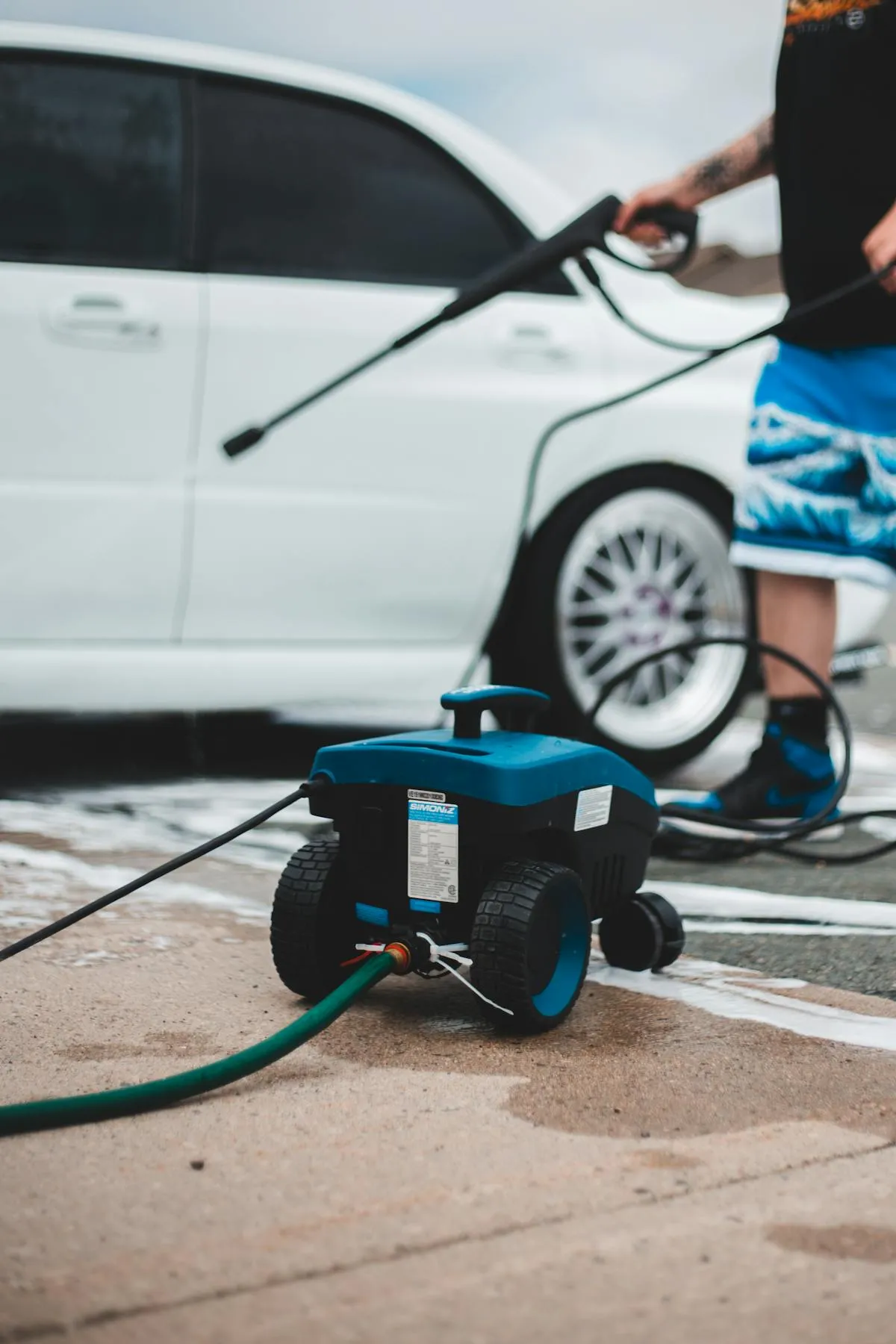
Pressure Washing 101: The Complete Beginner's Guide
Master pressure washing fundamentals: equipment safety, techniques, and common mistakes to avoid. Perfect for first-timers.
Pressure Washing Safety: Essential Rules Every Operator Must Follow
Critical pressure washing safety rules: PPE, electrical hazards, ladder safety, and chemical handling. Prevent injuries and protect property.
Nozzle Tips Explained: Degrees, Colors, and When to Use Each
Master pressure washer nozzle tips: understand color codes, spray patterns, and which nozzle to use for every surface safely.

Concrete Driveway Cleaning Guide: Remove Oil Stains, Tire Marks, and Algae
Professional concrete driveway cleaning techniques. Remove oil stains, tire marks, algae, and grime. Surface sealing, restoration, and long-term protection strategies.