
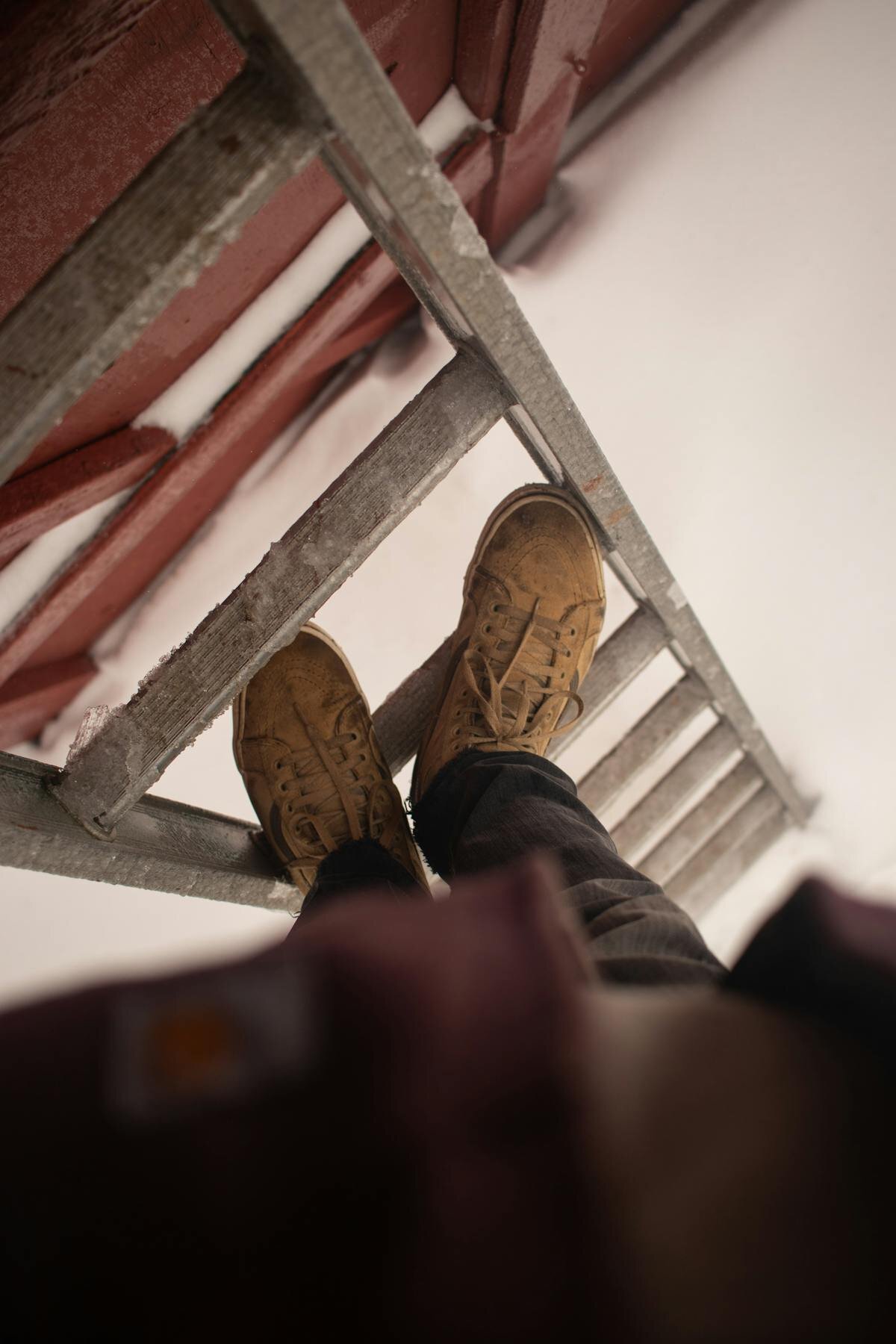
Pressure Washing Ladder Safety: Fall Protection and Working at Heights
Critical ladder safety protocols for pressure washing at heights. Fall protection, proper ladder setup, OSHA compliance, and alternative methods to avoid ladder risks entirely.
Pressure washing ladder safety: fall protection and working at heights
- Falls are the leading cause of death in pressure washing
- Proper ladder setup, equipment, and technique prevent catastrophic injuries
- Extension wands offer a safer alternative for most high-reach work
- When in doubt, don't climb—the risk is never worth the job
Falls from ladders cause more deaths in the pressure washing industry than any other hazard. Some accidents result in permanent paralysis, broken backs, or fatal injuries. Many happen in seconds with no warning.
Pressure washing from ladders combines several hazards at once. Water makes every surface slippery. Your focus stays on the wall, not your footing. The wand recoils unpredictably. Your stabilizing hand is occupied.
The nervousness you feel on a ladder isn’t weakness. It’s your body recognizing a genuine threat. That instinct keeps people alive.
Hazards
Pressure washing-specific dangers:
- Wet surfaces everywhere (ladder feet, rungs, ground)
- Recoil force from the wand
- One-handed operation (only one hand for stability)
- Visual focus on cleaning, not on ladder position
- Overreaching to hit “just one more spot”
- Rushing setup while customers watch
- Equipment weight adding instability
Fall consequences vary by height:
- 10+ feet: Often fatal or results in permanent disability
- 6-10 feet: Broken bones, head trauma, life-altering injuries
- Any height: Serious injury is more likely than you think
When pressure washing, one hand operates the wand while the other grips the ladder. The recoil force from the wand can destabilize your entire body, especially if you're focused on cleaning rather than balance. Your grip hand must be actively holding, not just resting against the ladder.
Critical rule: If you’re not 100% confident you can do the work safely, don’t. No customer, no paycheck, no deadline is worth a broken spine or worse.
Ladder selection and inspection
Extension ladders are standard for pressure washing, typically 16-40 feet tall. Two materials dominate:
- Fiberglass: Non-conductive (safe around electricity), heavier, more durable. Best for pressure washing, especially near power lines or wet environments.
- Aluminum: Lighter and cheaper, but conductive—dangerous around electricity. Avoid near power lines.
Inspect every ladder before every use:
- Visible damage: cracks, bends, dents in rails or rungs
- Loose or missing components: rungs, feet, spreader braces
- Worn anti-slip feet or damaged rung grips
- Missing weight rating labels or manufacturer marks
- Oil, grease, mud, or residue on rungs or feet
Replace immediately if anything is wrong. A new ladder costs $150-400. A ladder fall costs your life or permanent disability.
Keep ladders clean and dry between jobs. Pressure wash them with low pressure (under 1,000 PSI) and let dry completely before storing. Store vertically or horizontally on even ground in a dry location. Avoid leaving wet ladders in direct sun, which can warp aluminum and degrade fiberglass resin.
Proper ladder setup
Bad setup causes most ladder falls.
The 4:1 angle rule: For every 4 feet of ladder height, the base should be 1 foot away from the wall.
- 12-foot ladder: 3 feet from wall
- 16-foot ladder: 4 feet from wall
- 24-foot ladder: 6 feet from wall
- 32-foot ladder: 8 feet from wall
Quick check: Stand at the ladder base with your toes touching it. Reach your arms out to shoulder height—your fingertips should just touch the rails. If your shoulders are above the rails, the ladder is too steep. If they’re below, the ladder is too shallow and will slide.
Too steep = risk of falling backward. Too shallow = ladder slides out from under you. Both are catastrophic.
Level ground is non-negotiable:
- Firm, level surface with no rocks, branches, or tools underneath
- Dry ground (wet grass and mud slip)
- Never set up on a slope or uneven terrain
- Check for soft ground that might sink under weight
Setup equipment to level uneven ground:
- Ladder levelers ($40-80): Adjustable feet for slopes
- Dig out a level spot if needed
- Ladder jacks for extreme slopes
- Never use bricks, blocks, or improvised leveling—they shift and slip
Stabilizers ($50-150) are essential for pressure washing. This U-shaped attachment at the top:
- Holds the ladder away from the wall (6-12 inches)
- Increases lateral stability dramatically
- Prevents damage to siding, gutters, and trim
- Required for any high-pressure work
Anti-slip feet:
- Check rubber tread regularly; replace if worn or cracked
- Clean off mud and oil before every use—wet buildup causes slipping
- Consider rubber mats or pads ($20-50) for soft ground to prevent sinking
Securing the ladder:
- Tie off the top to the structure (gutter, rafter, roof edge) with proper knots
- Tie off the base to prevent sliding, or use a standoff at top plus a trained assistant
- Never rely on an untrained person to hold the ladder alone
- The person at the base needs clear instructions: hold rails, not rungs; stand aside from ladder line
Skipping the stabilizer, setting up at wrong angle, placing ladder on uneven ground, rushing setup while customers watch, and failing to tie off the top are the most frequent errors. Each increases fall risk exponentially. Take the extra 5 minutes to set up correctly.
Safe ladder work
Three points of contact at all times: Two feet and one hand, OR two hands and one foot. Always maintain this. Keep your belt buckle between the rails (centered on the ladder). Face the ladder when climbing or descending—never climb backward or sideways.
Never carry equipment up the ladder. Use a tool belt or hoist line instead. The pressure washer wand especially should never be carried up.
Working position safety:
- Both feet on the same rung
- Hinge at the waist, not by reaching
- Keep hips between the rails
- Never overreach—move the ladder instead
Maximum safe reach is about 2 feet from your body to the work surface. If you’re leaning or stretching to reach something, you’re overreaching. Move the ladder.
Pressure washing from a ladder requires special attention:
- One hand operates the wand; the other must actively grip the ladder (not just rest on it)
- Wand recoil can destabilize you—control the trigger and expect kickback
- Keep the trigger closed when not actively spraying
- Periodically glance at the ladder base to ensure it hasn’t slipped or shifted
- Move the ladder frequently instead of reaching beyond the 2-foot safe zone
- Use a stabilizer at the top
Avoid ladder work in dangerous conditions:
- High winds (15+ mph pushes ladders and destabilizes you)
- Rain (wet rungs and poor visibility)
- Lightning storms (metal conducts electricity)
- Extreme heat (leads to exhaustion and poor grip)
- Extreme cold (reduces grip strength)
Check the weather forecast before starting work.
Extension wands (6-24 feet, $150-400) let you stay on the ground while reaching heights. They're harder to control and more fatiguing than ladders, but eliminate fall risk entirely. Use them whenever possible for second-story work, high gutters, and rooflines.
Fall protection equipment
OSHA requirements vary by industry classification:
- General industry: Fall protection required at 4 feet and above
- Construction: Fall protection required at 6 feet and above
- Pressure washing: Often classified as general industry (4+ feet)
Use fall protection for:
- Ladder work above 6-10 feet
- Roof work of any kind
- Second-story work when significant fall risk exists
- Any time you feel unsafe at height
Proper fall protection gear:
- Full-body harness ($80-150): Distributes fall force across the chest and legs, preventing internal injuries
- Lanyard ($30-80): Connects harness to anchor point, limits fall distance
- Anchor point: Must be secure, rated for 5,000 lbs minimum
What’s NOT acceptable:
- Tool belts (offer no protection and can cause internal injuries)
- Rope alone without harness
- DIY systems or untested equipment
- Harnesses without proper training
Fall protection equipment requires proper training in setup, inspection, and use. Take a certified course before relying on it.
A fall protection system stops a fall within 6 feet. Any longer and the force can injure or kill. Anchor points must be at or above your head height. Test all equipment and connections before trusting them with your life.
Alternatives to ladders
When possible, avoid ladders entirely.
Extension wands (6-24 feet, $150-400) let you stand on the ground while reaching heights. They require more arm strength and offer less control than ladders, but eliminate fall risk. Ideal for second-story wall washing, high soffits and fascia, gutter exteriors, and any work 6-24 feet up.
Telescoping poles ($80-200 for under 15 feet) work for light cleaning and chemical application. Don’t use them for high-pressure work—too much flex and instability at height.
Lifts and scaffolding are worth the cost on larger jobs:
- Boom lifts: Reach 40+ feet safely, $300-600 per day
- Scissor lifts: Stable platform with full workspace, $200-400 per day
- Scaffolding: Large work area, very stable, $400-1,000+ per day depending on size and duration
Use lifts for large commercial jobs, complex multi-day work, difficult access, roof work, or when workers feel unsafe at height. The rental cost is justified by safety and productivity.
Common mistakes
Using damaged ladders: Cracked rails, loose rungs, worn feet. “It’s held up so far” is not a reason to keep using it. Inspect before every use. Remove damaged ladders from service immediately.
Improper setup: Wrong angle, uneven ground, no stabilizer, not secured. Follow the 4:1 rule every time. Use levelers for slopes. Stabilizer is required for pressure washing.
Overreaching: Reaching too far, belt buckle outside the rails, “just this once” to hit one more spot. Move the ladder instead. It takes longer but prevents falls.
Carrying equipment up the ladder: Wands, tools, chemicals. Both hands must be free for climbing. Use a tool belt or hoist line.
Working alone: No one knows you’re at height, no help if you fall, no one to call 911. Have another person on site, phone accessible. Consider hiring a professional for high work.
Ignoring weather: Ladders get slippery in rain, unsafe in wind, conductive in lightning storms. Wait for better conditions.
Job-specific hazards
Second-story house washing:
- Stabilizer is required
- Use three points of contact whenever possible
- Have an assistant stabilize the base
- Consider extension wands as an alternative
- Clean in sections; don’t overreach
Gutter cleaning:
- Reaching into gutters destabilizes you on the ladder
- Better alternative: Use a gutter tool or soft-bristle brush from the ground
- If you must use a ladder: Stabilizer required, assistant recommended
- Move the ladder every 6-8 feet instead of reaching sideways
Roof access:
- Never use a ladder for getting on or off a roof
- The transition point (where ladder meets roof edge) is where most falls occur
- Roof slope increases risk dramatically
- Better option: Proper roof access with fall protection, or hire a professional
Roof work carries extreme fall risk. The transition from ladder to roof is especially dangerous—you lose three-point contact, slope affects your footing, and you're at maximum height. Many professionals hire specialists for roof work rather than do it themselves. This is wise.
Emergency response
If you fall:
- Don’t move immediately—assess injuries first
- Call for help if injured
- Keep a phone accessible on the ground or in your pocket
- Know the route to the nearest hospital
If someone else falls:
- Call 911 immediately if there’s any possibility of serious injury
- Don’t move them unless they’re in immediate danger
- Keep them warm (shock develops quickly after trauma)
- Stay with them until help arrives
- Note any details about the fall for paramedics
Training and certification
Recommended training:
- Fall protection (OSHA-compliant course)
- Ladder safety (manufacturer or industry course)
- First aid and CPR certification
Industry certifications:
- OSHA 10-hour construction safety course
- Manufacturer-specific ladder safety training
- Industry association training (PWNA, UAMCC)
For homeowners doing their own work:
- Read all ladder and equipment safety materials
- Watch instructional videos from reputable sources
- Start with low projects to build confidence and skills
- Know your limits—don’t tackle work above second story if you’re uncomfortable
- Hire professionals for complex access, high work, or anything that feels unsafe
Final word
Falls happen in milliseconds with zero warning. One moment you’re focused on washing. The next, you’re on the ground.
Proper setup, correct equipment, and safe practices separate productive days from life-altering accidents. Sometimes it comes down to one decision.
The most important rule: If you’re not 100% confident you can do the work safely, don’t. There’s no shame in calling a professional. Your ability to walk, work, and care for yourself matters more than any job or paycheck.
Was this article helpful?
Your feedback helps us improve our content.
Related Articles
Pressure Washing PPE Guide: Essential Protection for Every Job
Complete guide to pressure washing personal protective equipment (PPE). Required gear, chemical protection, and safety standards.

House Washing Guide: Safe Techniques for Every Siding Type
Master house washing techniques for vinyl, stucco, brick, wood, and fiber cement siding. Soft wash methods, chemical selection, and protection protocols for safe exterior cleaning.