
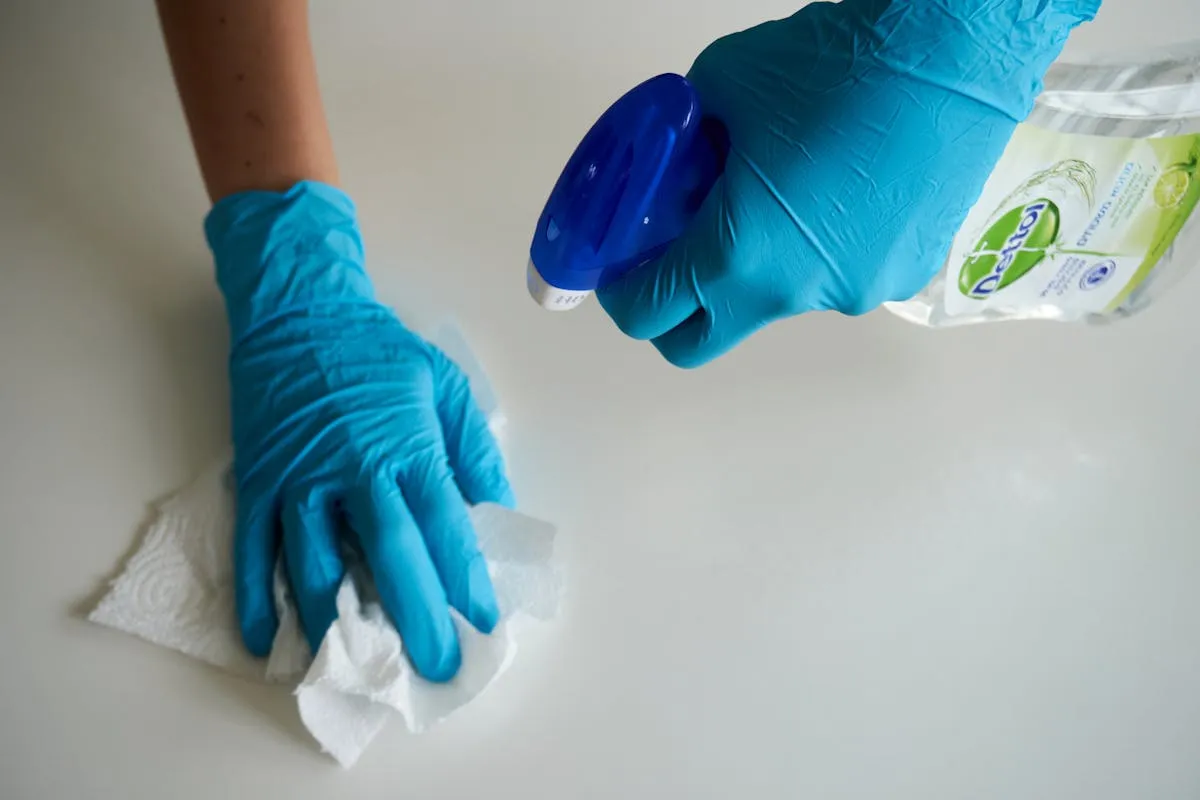
Surfactants Guide: Understanding Cleaning Boosters for Pressure Washing
Complete guide to pressure washing surfactants: types, selection, mixing ratios, and how surfactants improve cleaning results for house washing and flatwork.
Key Takeaways
- Surfactants help chemicals cling — Prevent runoff on vertical surfaces
- Reduce surface tension — Allow better penetration
- Improve cleaning — 30–50% better results vs. SH alone
- Not all surfactants are equal — Professional products outperform household
- Amount matters — Too little equals poor results, too much wastes money
What is a Surfactant?
A surfactant is a surface-active agent. It does one thing: reduces surface tension so water spreads instead of beading up. That simple action changes everything about how your chemicals work.
Water naturally wants to bead up and roll off. Surfactant breaks that barrier. Your chemicals spread evenly, penetrate deeper, and stay on the surface long enough to actually work. That’s why it’s non-negotiable for vertical surfaces and why professionals use it on everything when washing houses.
Foam is the visual indicator. You see that blanket of foam, you know your chemical is where it needs to be. Without surfactant, you’re just pouring chemical down the side of a house and watching it run off into the dirt.
How It Works
Water molecules cling to each other due to hydrogen bonding. This surface tension is why water beads up on glass or a freshly waxed car. Surfactant molecules interrupt those bonds, allowing water to spread thin and make contact with the entire surface.
Once your chemical spreads properly, it can emulsify oils and grime, penetrate into pores, and do actual work. On vertical surfaces, it keeps the chemical from immediately running off—that’s your dwell time, which is where real cleaning happens.
- Without surfactant: chemical runs off in seconds, uneven coverage, wasted product.
- With surfactant: chemical spreads, clings, penetrates, and cleans.
Types of Surfactants
Professional Grade
Professional surfactants are designed specifically for pressure washing and SH chemistry. They’re concentrated (you use 1–2 oz per gallon), foam well, and stay effective when mixed with chlorine.
Popular brands include Simple Cherry (the industry standard), Green Wash (citrus-based and usually cheaper), and various products from pressure washing suppliers. Cost is $20–50 per gallon, but one gallon makes 30–60 gallons of working solution. That works out to 15–50 cents per job.
The trade-off: you have to order them—not at the hardware store. But for professional work, this is what you use.
Household Alternatives
Dish soap (Dawn is most common) and laundry detergent work in a pinch. Dish soap costs 40–150 cents per working gallon when accounting for dilution. Laundry detergent can leave residue and might have brightening agents you don’t need.
These are fine for homeowners cleaning their own driveway. Not recommended for professionals. You’ll waste more chemical overall and get inconsistent results. It’s false economy.
Specialized Formulas
Some products are designed specifically for foaming heavily (foam cannons and special injectors). Others are thickened so they stay on steep surfaces longer. Some combine surfactant with brightening agents for wood restoration.
For most pressure washing jobs, standard professional surfactant is all you need. Get specialized products only when solving a specific problem.
Selecting the Right Surfactant
Match the surfactant to the job.
House washing: Use high-foaming professional surfactant. The foam clings to vertical siding and tells you where you’ve applied. Standard cherry-scented products work great.
Flatwork (concrete, pavement): Any quality surfactant works. Foam is helpful for showing coverage, but not critical since gravity keeps the chemical on the surface.
Wood: Use a gentler formula. Some surfactants are optimized so they don’t damage wood fibers. Brightening agents are optional—add them if you’re doing restoration work.
Roofs: These are steep and vertical, so you need maximum cling and extended dwell time. Use a high-quality professional product formulated for maximum foam retention.
For most of your work, one standard professional surfactant does the job. Only get specialty products when you’re solving a specific problem.
Mixing and Application
Basic Mixing Ratios
For a standard 5-gallon house wash: water, 12.5% SH (12 oz), and surfactant (2–4 oz). Heavy growth gets more SH (18 oz) but same surfactant ratio. Flatwork gets the same mix since you’re not dealing with vertical runoff.
Follow the manufacturer’s directions. More surfactant doesn’t equal better cleaning—it just wastes money and clogs equipment.
Mixing Order
Water first. Surfactant second. SH last. That’s it.
Why? Mixing the order prevents excessive foam when you add the SH. Surfactant dissolves better in water. SH added last means you’re not creating a dangerous splash or chemical reaction. Small detail, huge difference in safety and results.
Application Methods
With a downstream injector, place your mixed solution in a bucket, put the siphon hose in it, and let the washer draw the chemical. Use a black soap nozzle (required for proper draw). You’ll see foam in the bucket when it’s working.
With a pump sprayer, mix everything thoroughly, fill the sprayer, and apply manually. You get more control and can see exactly where you’re applying.
Foam cannons need a higher surfactant ratio (6–8 oz per 5 gallons) to create that thick blanket, but they’re optional. Most jobs are fine with a standard pump sprayer or injector.
What You Should See
Good surfactant action looks like foam clinging to vertical surfaces, even coverage with no missed spots, visible suds throughout application, and chemical that doesn't drip off immediately.
Poor surfactant action looks like liquid running straight down, no foam, uneven coverage, and wasted chemical.
The difference in performance is dramatic. Without surfactant, you get 40–60% cleaning effectiveness. With household soap, 70–80%. With professional surfactant, 90–95%. That’s not a small gap.
Troubleshooting
No foam: You didn’t use enough surfactant, or your bottle is old. Increase the amount and try again. If that doesn’t work, grab a fresh bottle. Old surfactant loses effectiveness.
Too much foam: You mixed too strong or used a heavier-foaming product than you need. Reduce the amount next time. Don’t over-agitate when mixing.
Clogging equipment: Make sure you’re mixing the right ratio. Too thick and it clogs. Clean your filters. If your surfactant looks separated or smells off, replace it.
Cost vs. Value
Professional surfactant ($20–50 per gallon) costs roughly $3–5 per job when mixed at 1–2 oz per gallon. Dish soap and laundry detergent seem cheaper initially, but when you account for how dilute they are, you’re spending 40–150 cents per working gallon.
More importantly, professional surfactant gets the job done in one pass. Household soap might take two. That’s your labor time. That’s customer satisfaction. That’s the difference between a callback and a referral.
If you’re running a pressure washing business, professional surfactant is not an expense—it’s an investment that pays for itself on the first job.
Pro Tips
Match the surfactant to the job. House washing needs high foam and SH compatibility. Flatwork needs good penetration and easy rinsing. Wood needs a gentler formula.
Test new products on your own driveway first. Don’t test on a customer’s house. Mix a small batch, see how it performs, check for clogging, then scale up.
Foam cannons are nice for large jobs. If you’re doing a 5,000 sq ft house, a foam cannon speeds things up and ensures even coverage. For typical work, a pump sprayer or downstream injector is fine.
Store it properly. Cool, dark place. Original container. Sealed tightly. Unopened bottles last 2–3 years. Once opened, use within a year.
Don’t overuse it. Follow the manufacturer’s directions. You’re wasting money and creating problems.
Common Myths
Myth: Dish soap works just as well as professional surfactant.
False. Dish soap isn’t formulated for SH chemistry, foams poorly on vertical surfaces, and gives inconsistent results. Professional surfactants are 30–50% more effective.
Myth: More surfactant means better cleaning.
Wrong. The optimal amount is in the product directions. Excess wastes money, clogs equipment, and creates rinsing problems. Quality and amount balance are what matter.
Myth: Surfactant is optional.
Absolutely not. SH alone achieves 40–60% of what’s possible. Add professional surfactant and you hit 90–95%. If you’re doing professional work, it’s mandatory.
Next Steps
Was this article helpful?
Your feedback helps us improve our content.
Related Articles
House Wash Mix Recipes: Professional Ratios for Every Surface
Exact pressure washing chemical mix recipes: SH concentrations, surfactant ratios, and application methods for vinyl siding, stucco, brick, and more.
Soft Washing Technique: Complete Method and Flow
Master soft washing: low-pressure cleaning with chemical pretreatment. The safe method for roofs, siding, and delicate surfaces.
House Washing 101: Complete Guide to Cleaning Home Exteriors
Master house washing: techniques, chemical application, and safe methods for vinyl siding, stucco, brick, and painted wood. Professional results for homeowners.